Hawzu vs TestRail the open TestRail alternative
TestRail charges per seat and leans on add-ons for defect tracking. Hawzu does it all in one modern platform — native defects, requirements, releases, and analytics — automation-agnostic, and free for five people, $20 per member after.
Built for execution, not folders.
Why teams move off TestRail
Almost nobody leaves TestRail because it manages test cases badly. They leave because a release needs more than a well-organised test repository.
TestRail has been the default choice in test management for over a decade, and it earned that. The repository model is solid, the reporting is mature, and the integration surface has been battle-tested by thousands of teams. If your question is where do our test cases live, it answers it well.
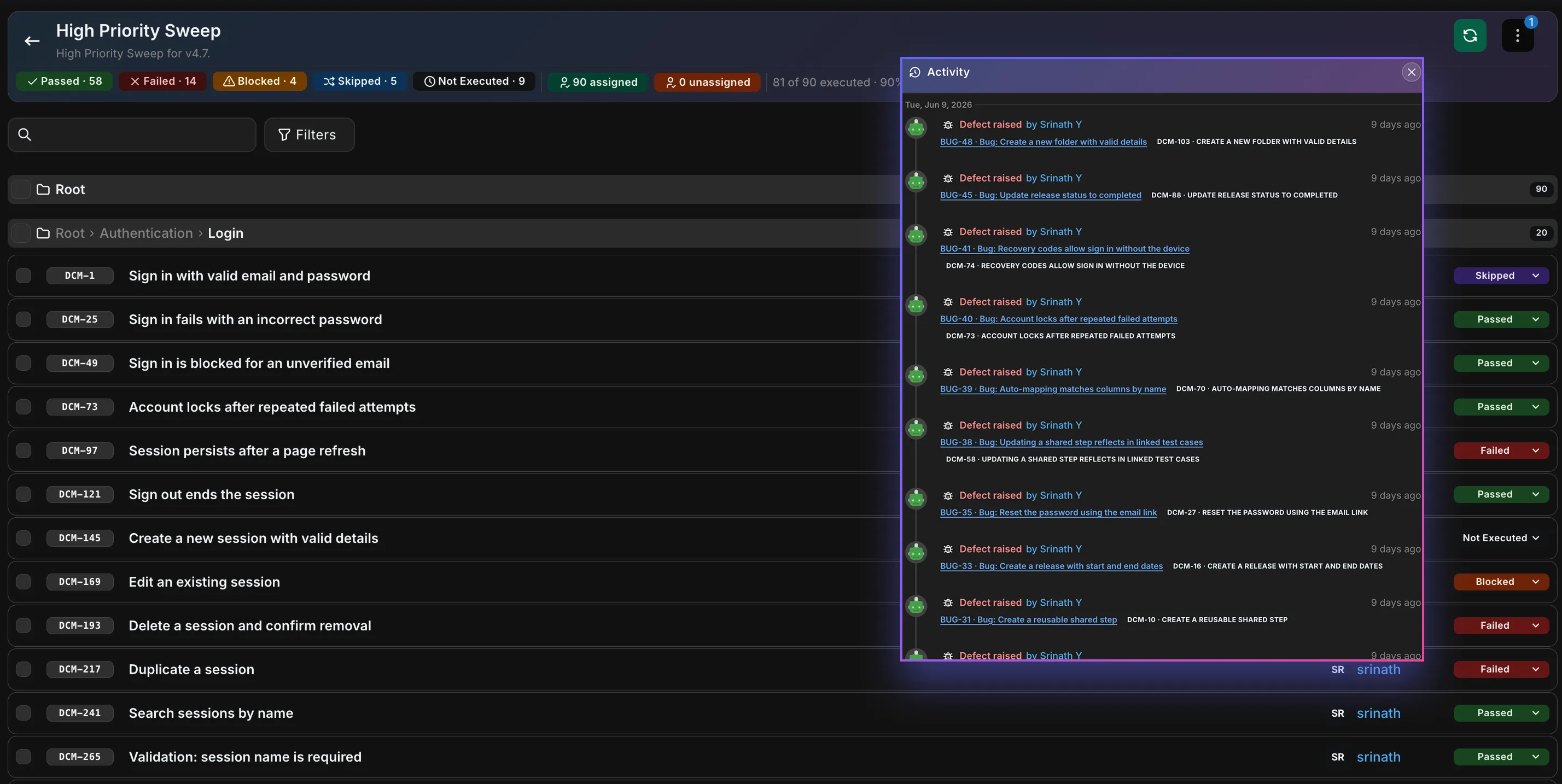
The friction shows up as the team grows around it. Defects go to Jira. Requirements live somewhere else again — a tracker, a doc, a spreadsheet. Release sign-off becomes a person assembling screenshots from three systems the afternoon before a go/no-go call. Each of those is a small integration decision, and none of them is TestRail's fault, but together they mean the answer to "can we ship?" isn't in any single tool.
Cost compounds the same way. TestRail is billed per seat — $39/user/month on Professional, billed annually, since the $22 Essentials tier stops at five users — and the pieces that close those gaps — defect tracking, deeper analytics — are things you're already paying another vendor for. Teams end up with a per-seat test tool plus a per-seat tracker plus whatever reporting layer sits on top.
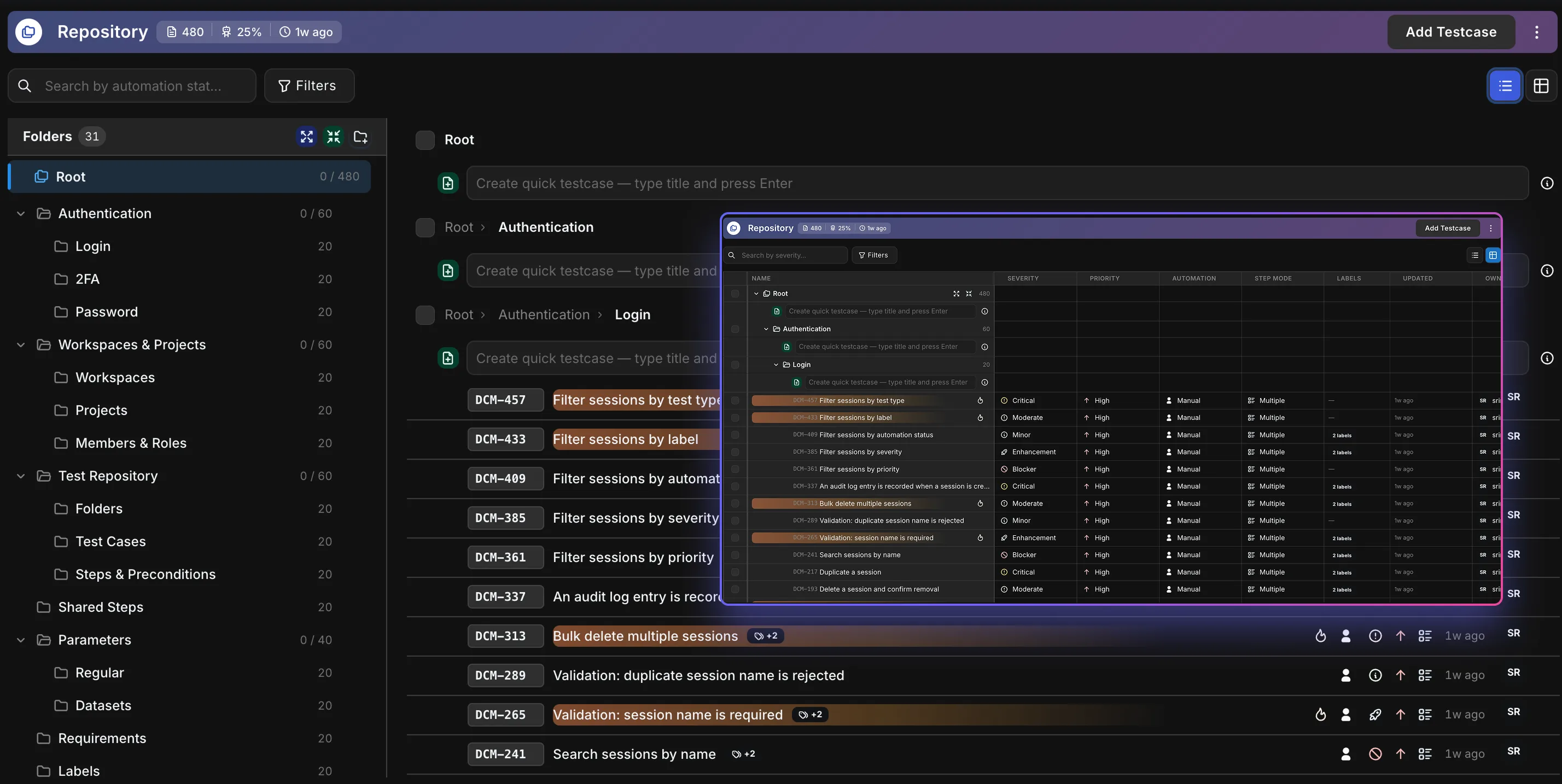
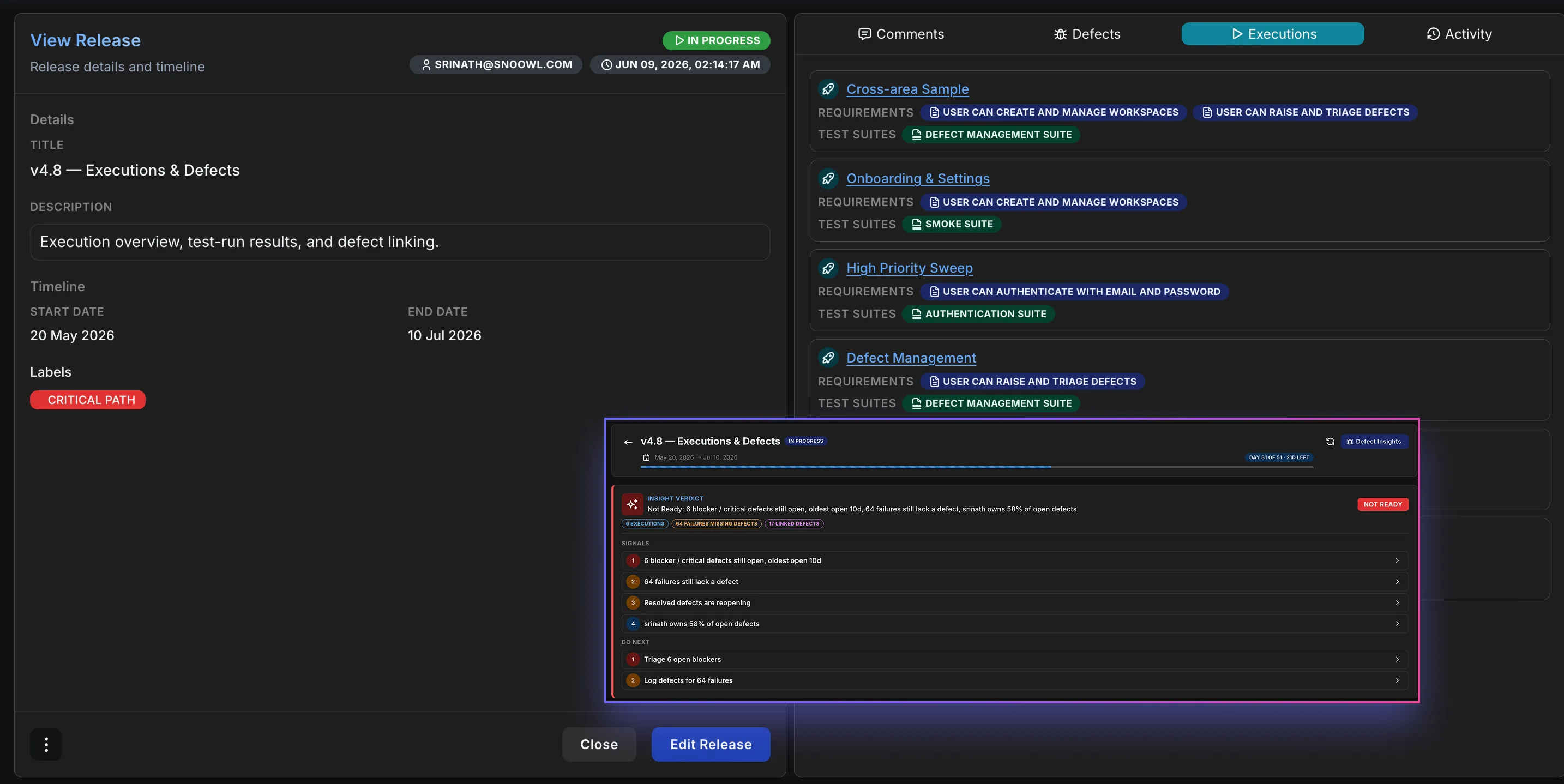
Hawzu starts from the release rather than the repository. Requirements, test cases, executions and defects are one data model, so coverage rolls up a requirement tree without a sync, a defect knows the step that produced it, and an execution belongs to a release you can gate. That last part is the reason the tools aren't interchangeable: Hawzu ends in a scored go/no-go with a frozen sign-off snapshot, not a report you export and paste into a deck.
See Hawzu in action
Anyone can claim they beat TestRail. Here's exactly what we built.
Hawzu vs TestRail, at a glance
Comparison reflects publicly available information and is kept as fair as we can make it. Pricing checked 25 Sep 2026 against TestRail's own published pricing. Details may change — check their site for the latest. Last updated 4 Oct 2026.
Why teams pick Hawzu
Genuinely all-in-one — test cases, native defects, requirements, releases, and analytics in one place, with no add-ons to buy or bolt on.
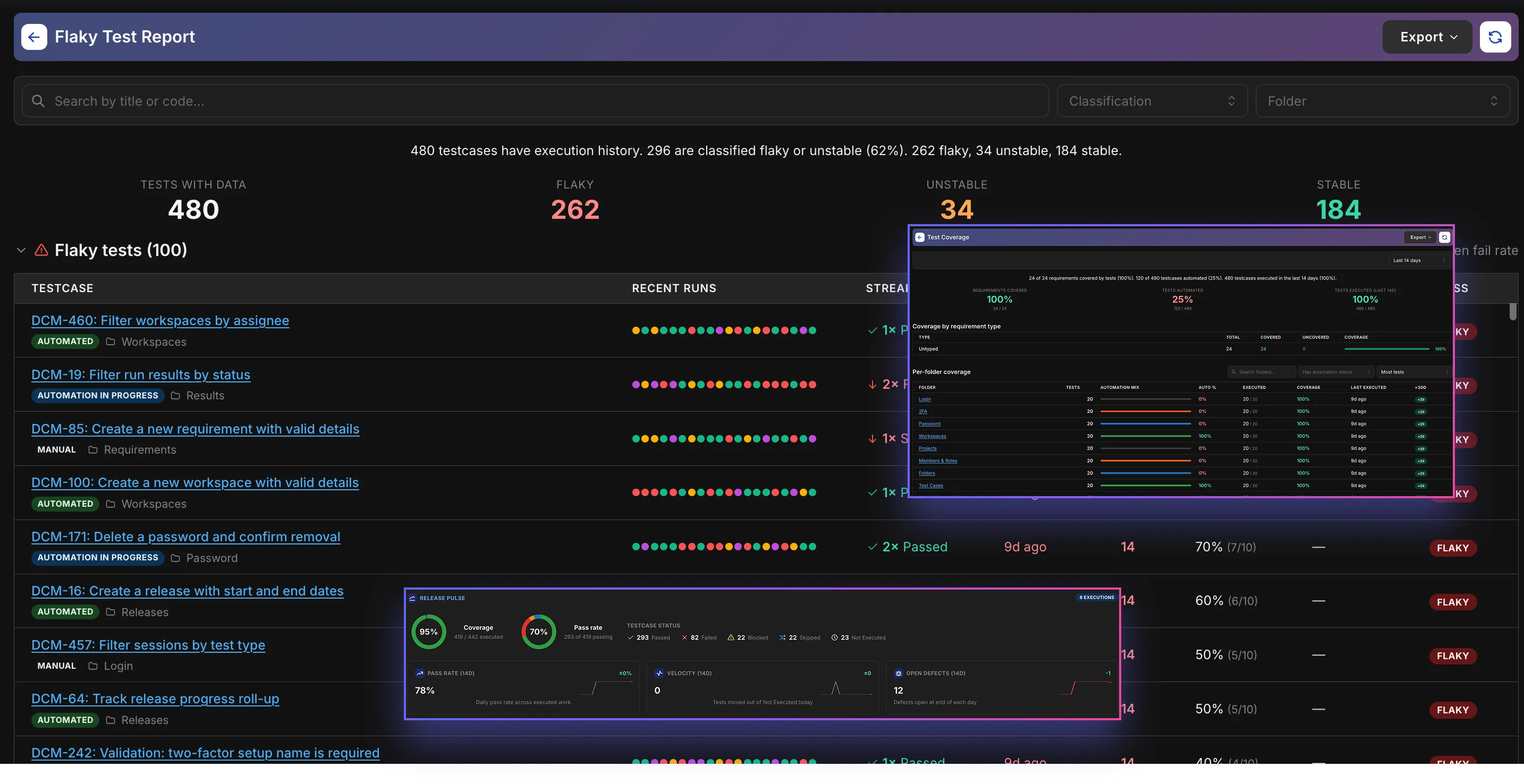
Built-in Observatory analytics: flaky-test tracking, traceability matrix, defect aging — out of the box.
AI test case generation, plus similar-bug search over your defects.
Automation-agnostic — keep Selenium, Playwright, or Cypress and report results in via API.
Ask your test data from the editor you already work in — Hawzu speaks MCP, so Claude, Cursor or ChatGPT reads your cases and defects read-only, under your own permissions. On every plan.
No add-ons, no per-seat bill — free for five people, $20 per member after.
When TestRail might still make sense
TestRail is the category's default for a reason — a very large installed base, mature documentation, and a team that already knows it if you've hired experienced QA.
The integration ecosystem is deep and battle-tested: trackers, CI systems, and reporting tools that have worked against TestRail for years.
Self-hosted deployment on the Professional and Enterprise plans, for teams that cannot use cloud. Hawzu is cloud-only.
If your defects genuinely belong in Jira and you want them to stay there, TestRail's integration-first model fits that cleanly.
Common questions
How do I move my TestRail test cases into Hawzu?
Export your suites from TestRail as CSV or Excel and run them through Hawzu's import wizard — you map TestRail's columns onto Hawzu fields, preview a sample, and import folder structure along with the cases. Images and file links embedded in your case descriptions get re-hosted into Hawzu automatically rather than breaking. We also keep TestRail-specific field mappings on hand: send your export to contact@snoowl.com and we'll do the mapping for you.
How much does Hawzu cost compared to TestRail?
TestRail's Essentials plan is $22/user/month billed annually but stops at five users; above that, Professional is $39. Both come before the tracker you pay for separately to hold defects. Hawzu is $20 per member per month billed yearly, with no seat minimum and a free plan for five — about half Professional's seat price, with the tracker already in it. A five-person team pays TestRail $1,320 a year and Hawzu nothing; a ten-person team pays $4,680 against $2,400.
Does Hawzu run automated tests like a framework?
No. Hawzu is automation-agnostic — you keep Selenium, Playwright, Cypress or whatever you already run, and report results in through the REST API or by posting a JUnit/xUnit report in a single call. We manage and analyse testing; we don't try to be your test runner.
TestRail has built-in reports. What does Observatory do differently?
TestRail's reports tell you what happened in a test run. Observatory is question-first: you pick the question — which tests are flaky, where is coverage thin, how long are defects sitting — and it builds the chart. It also spans the whole lifecycle rather than the run, so requirement coverage, defect aging and MTTR, and a 0–100 project health score come from one dataset.
Can I keep using Jira for defects?
Yes. Hawzu has native defect tracking, so you don't need Jira — but if your engineers live there, connect it and push defects across. GitHub, GitLab, Azure DevOps and Linear work the same way. The difference from TestRail is that the integration is optional rather than the thing that makes defect tracking work at all.
Is Hawzu ready to replace TestRail at enterprise scale?
If your blocker is that testing, defects and releases live in three different tools, Hawzu solves that today — requirements, tests, native defects, releases and analytics are one system with a scored go/no-go at the end. TestRail offers self-hosted deployment on its Professional and Enterprise plans, which we don't; if on-prem is a hard requirement, that is the deciding factor. Single sign-on isn't — Hawzu includes it on every plan, TestRail only on Enterprise.
Try Hawzu free
Every feature on every plan. Free for five people, $20 per member after — no credit card.